Varicose and Spider Veins
What are varicose and spider veins?
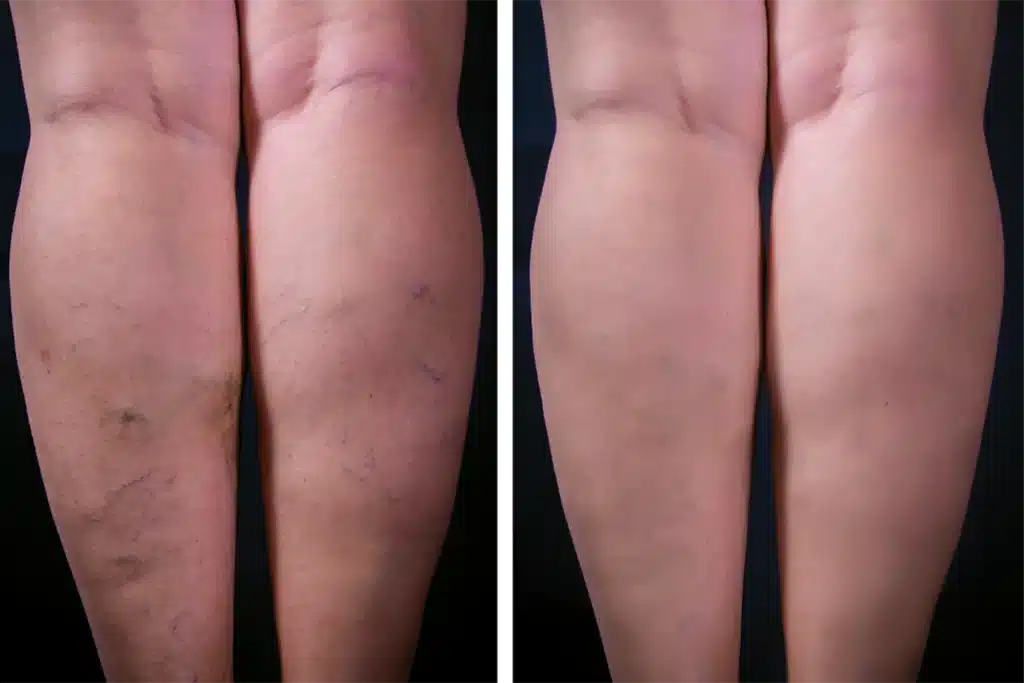
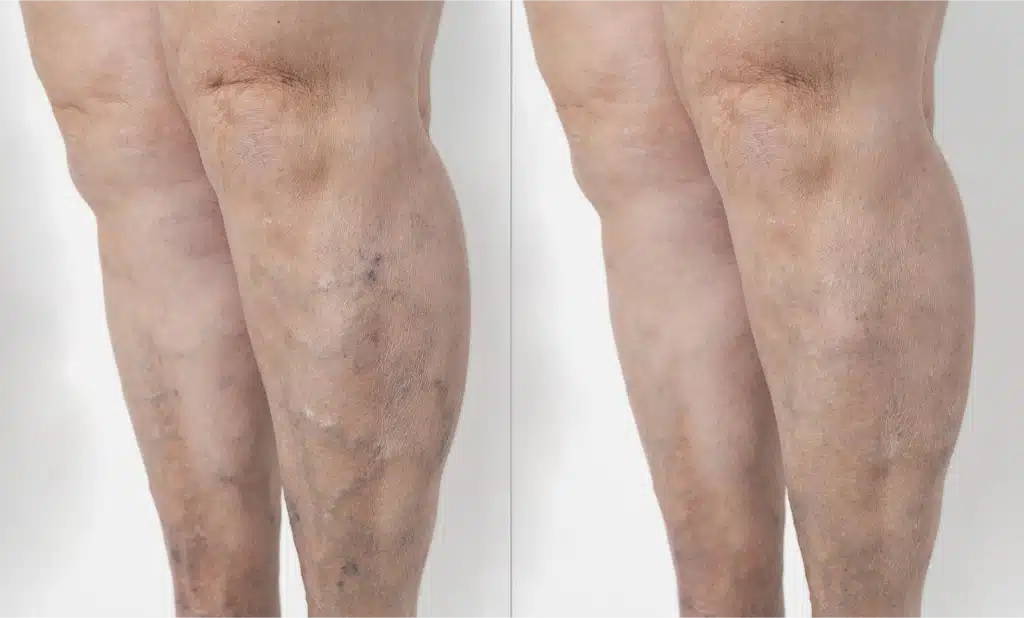
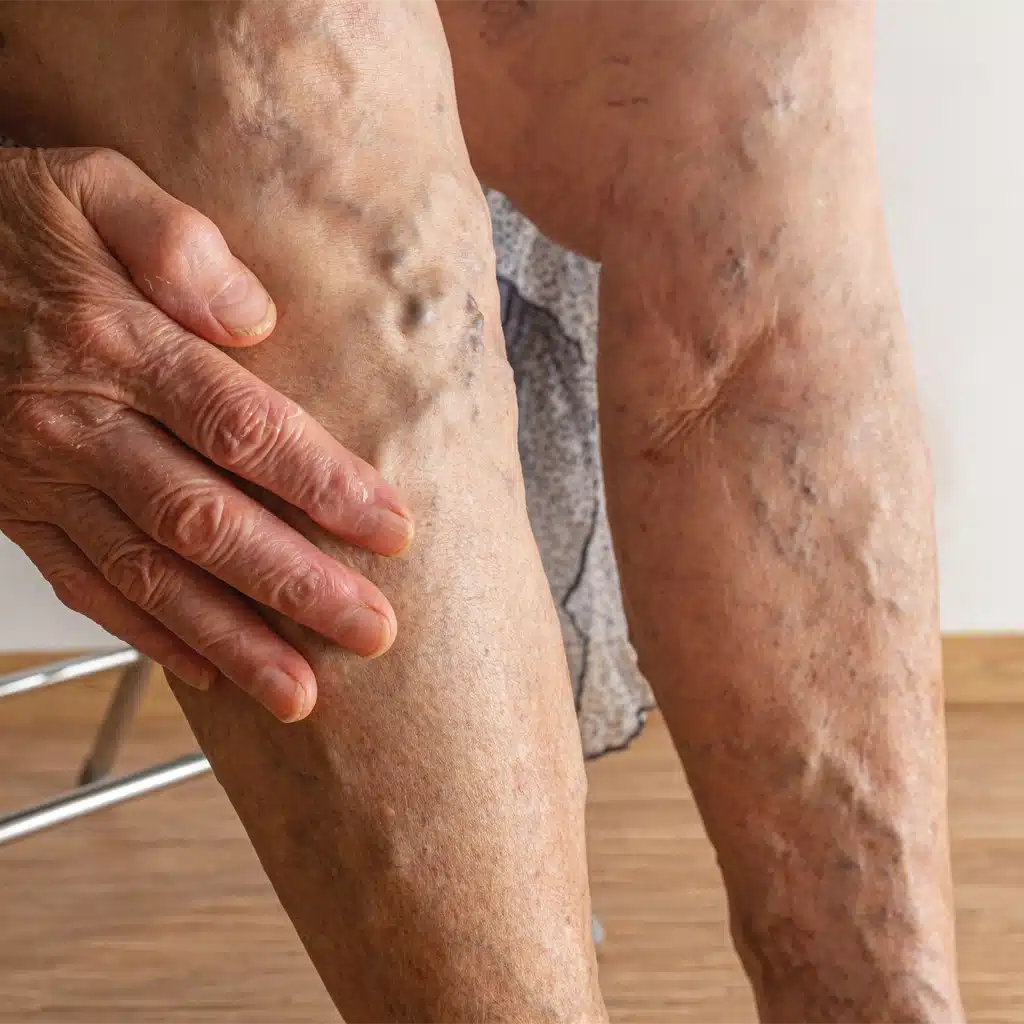
Varicose veins are enlarged, rope-like veins that rise above the surface of the skin. Spider veins are smaller, superficial veins visible on the skin’s surface and may appear red, blue or purple in color. They are common, affecting more than 25 million Americans.

What causes varicose and spider veins?
Varicose and spider veins develop when the one way valves inside the vein (that prevent blood from flowing backward) become weak or damaged. When they do not work properly, blood can pool in the veins, causing them to enlarge. This condition is called venous reflux.
Risk factors for developing varicose and spider veins include:
- Aging
- Genetics (family history)
- Pregnancy
- Obesity
- Long periods of standing or sitting
Are varicose and spider veins dangerous?
Spider veins are considered a cosmetic concern and are not generally considered to be harmful. Varicose veins are most often not dangerous. In some cases, however, they can be a sign of a more important underlying venous condition. In such instances, they can lead to venous blood clots, bleeding, venous leg ulcers (slow-healing sores) and skin changes or discoloration.
Treating varicose and spider veins
“Conservative” treatment for varicose veins may include weight management, exercise, leg elevation and wearing compression stockings. Graded compression stockings and hosiery provide pressure that is strongest around the foot and ankle and looser as it moves up the leg. The steady pressure provided by compression socks assists the leg muscles and venous valves in moving blood more efficiently and quickly up the legs to the heart. For your convenience, we offer a comprehensive selection of graded compression stockings.
If conservative treatment hasn’t worked, several minimally invasive treatment options are offered by our experts at Boulder Vein Center. Because no two patients are the same, we offer a variety of treatment options based on your specific type of venous condition and treatment goals.